Green Think Pitch
Main target and focus. Cultivating the unused spaces around buildings (parking lots, planting strips, easements) by pairing them with community members and organizations (Master Gardeners, schools, elder care, and work force rehabilitation). Growing good will and brand awareness by providing communities with opportunity.
Work on this pitch.
In concert with Larry Fink’s 2018 letter to CEO’s declaring a sea change in the direction of capitalism towards sustainability, a direction largely put on hold by the Trump administrations over the last decade. A key component was that companies “… must also support communities” by considering them stake holders in the companies operation.
This is is a dream. An idea of a concept for the outline of an organization. This dream for business in America it that it incorporates longer term thinking, 10-20 year time horizons on ROI and a broader sense of responsibility beyond share holders, to stake holders, community and environment. A business that promotes democratic process in its governance. This new ethos creates the opportunity for companies, institutions, to improve their physical plant, campus, public relations and reduce long term net operating cost, by taking advantage of existing, and forthcoming tax, and civil incentive programs.
This isn’t Green Washing, its green engineering with the intent of:
Reducing costs.
Taking advantage of civil investment.
Investing in the companies foundational infrastructure.
Taking advantage of local community resources.
Including the local community around operations as stake holders engendering good will and investment.
1. Reducing costs
By modernizing physical infrastructure. One of the most effective and low cost ways is by replacing incandescent lights with LEDs. Swapping existing hardware with POE (Power over Ethernet devices). The old devices are then able to be sold to recover the cost of investment. Insulation and Solar programs offset the cost of lowering long term energy usage. Depending on how the details these improvements will have a net zero cost to the company in 1 to 20 years.
2. Taking advantage of civil investment
Use tax incentive, rebate and grant programs to offset capital investment costs.
3. Investing in foundational infrastructure
A campus is the foundational infrastructure of a company. Its a statement about who or what the company is, and what its values are. Go solar. Get batteries, Use ductless heat pumps (possibly become a substation for heating and cooling). Upgrade building materials, and improve insulation etc. But what is often overlooked is the exterior of the building. The easements, and vertical spaces. These spaces provide an opportunity for the company to create beautiful community spaces, that reduce urban heat island effect, heating and cooling, storm water runoff issues, and biodiversity.
4. Taking advantage of local community resources
Man hours and creativity. There are many people in local communities who are idling away their time and creativity because there is no useful outlet or for those energies. This project proposes opening up uncultivated space for these energies as an outlet with tangible benefits for the business as well as its reputation.
5. Including local community around operations as stakeholders
Shifting corporate thought to actively include individuals in the communities near operation sights will draw in resources and good will for minimal effort and or investment, while directly benefiting the company by creating local advocates, and promoting long term sustainable practices that ultimately reduce corporate overhead.
Items 1, 2, & 3 are three sides of the same coin. Parts 4 & 5 are mutually intertwined, and the whole process is mutually reinforcing.
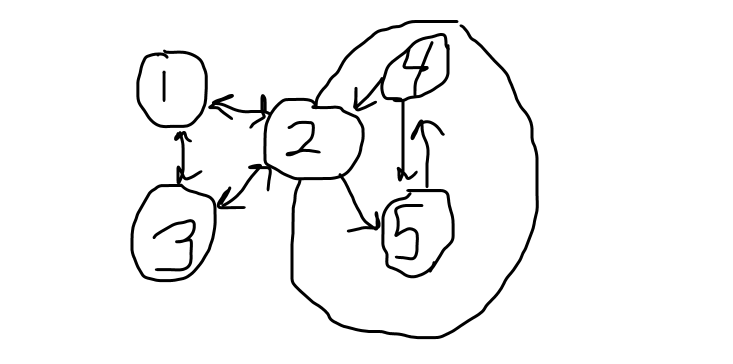
This is what you get when you have no drawing talent and use a strange mouse.
Green Space is the 1st and most unique aspect of this plan. Businesses exist and cater to the other needs of internal power management and infrastructure. While we are capable of providing a one stop shop for coordinating and executing green renovation projects we are the only ones to focus specifically on the undercultivated spaces surrounding buildings.
Some campuses have green spaces while others don’t. More often then not the green spaces around campuses are maintained at the bare minimum of creativity, utilizing often over priced mow and blow services. The biodiversity, utility and beauty of these spaces are about as diverse as a parking lot.
What we do is pair an individual or community organization with the land holder or leaser to cultivate that space. Any costs already spent on mow and blow services can be funneled into this project. The company could invest and get community investment into the campus maintaining its space while improving it by providing outlets for the community. The difficulty that arises from these types of activity is usually only a lack of homogony in appearance. The increased biodiversity and cultivation means that a uniform look, unaffected by seasonality is lost. What is gained is 10x more enticing to the eye and mind of both customer and employee.
The costs associated with these projects are usually lower then current services for companies with green spaces. And some times higher for companies without them. However in these cases there are some hidden energy benefits, mainly in the reduction of the urban heat island effect lowering summer time cooling costs as well as providing storm water run off.
Some times its necessary to invest in the initial set up, but not always. We are able to provide comprehensive planning, and cost projections.
Where the data is lacking due to no one doing this, are in the returns generated from transforming theses spaces into something cultivated and beautiful. There are obvious social benefits, but there is a lack of data of what can be harvested in these difficult urban or industrial environments and then sold on the open market.